
TheatreSquared Blurs the Line Between Stage and Everyday Life
In downtown Fayetteville, TheatreSquared is already in motion long before any curtain rises, but its story, and much of its evolution, is closely tied to the leadership of Executive Director Shannon A. Jones.
Jones has been instrumental in shaping the organization’s growth since joining in 2014. Her path through TheatreSquared mirrors the company’s own sense of transformation, starting as an assistant stage manager and steadily rising through roles like production stage manager, associate producer, and general manager before stepping into executive leadership. That hands-on experience continues to inform how she approaches both the creative and operational sides of the theatre today, from overseeing budgets to coordinating large-scale events like the Arkansas New Play Festival, which brings together dozens of artists each year to develop new work.
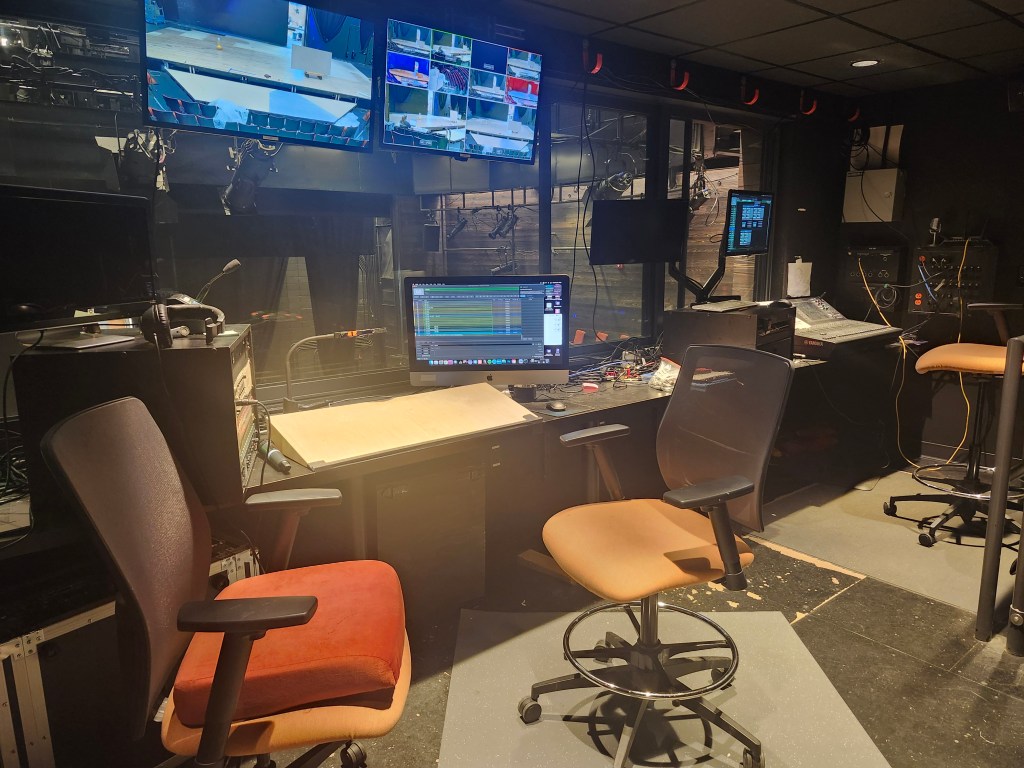
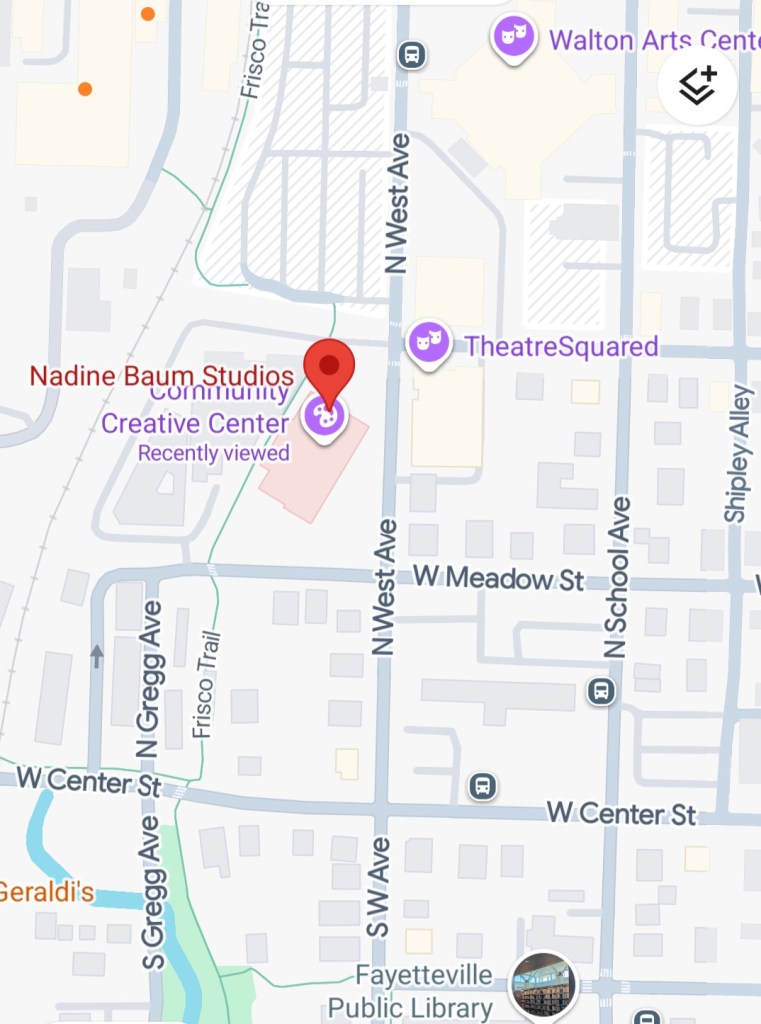
Back in 2005, the company first made its home just across the street at Nadine Baum Studios, a converted beer warehouse. It was a space that demanded creativity. Sets had to adapt. Performances had to work around the building’s limitations. That early experience shaped the company’s identity and made flexibility part of its foundation.
That vision eventually became something much bigger and far more intentional, driven in part by Jones’ commitment not just to growth, but to community. Throughout her tenure, she has worked to expand partnerships, support a wide network of artists, and prioritize diversity, equity, inclusion, and access within the organization.
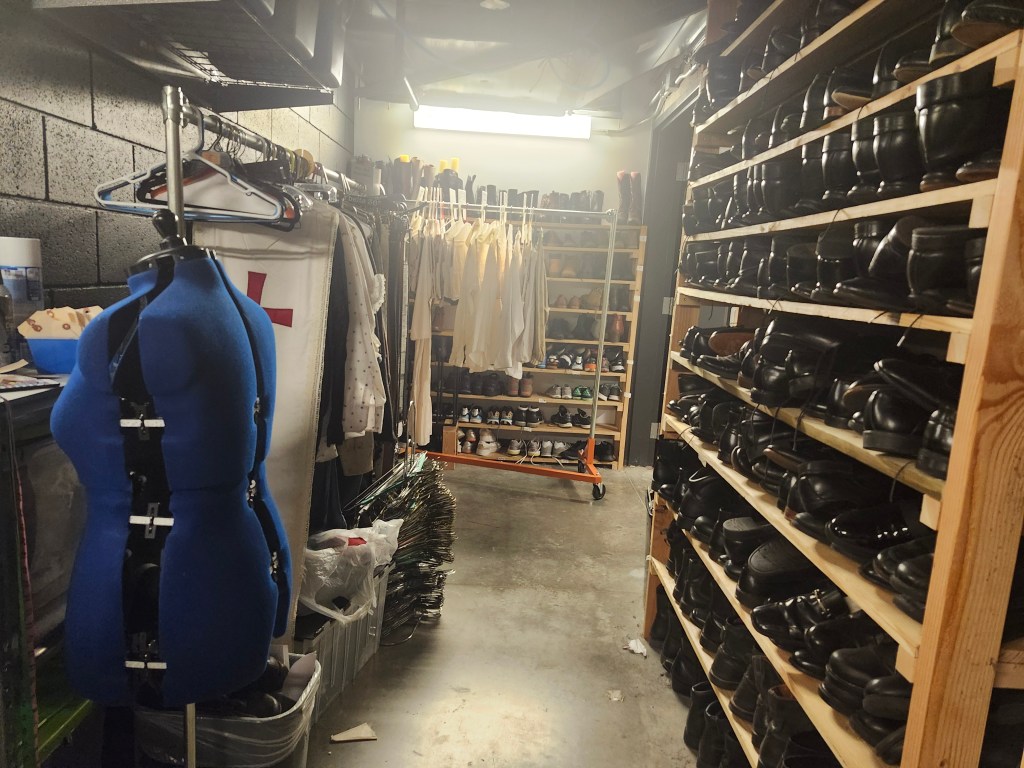
“In this new space, we have two theaters, a rehearsal room upstairs… everything we do is on-site,” she said. “Our costume shop, scene shop, everybody is housed all in one building.”

Today, that same idea of transformation carries into its current home, just on a much larger scale.
By mid-morning, the Commons at TheatreSquared is already alive with a quiet, everyday rhythm. This is not just a lobby or a waiting area; it is a three-level, fully equipped event space designed to shift and adapt. On the first level alone, it can move from a café-style hangout into theatre-style seating for up to 200 people, or a standing reception for 350. Upstairs, the Circle Level and Community Room offer more intimate settings, with flexible layouts, floor-to-ceiling glass, and views of downtown Fayetteville.
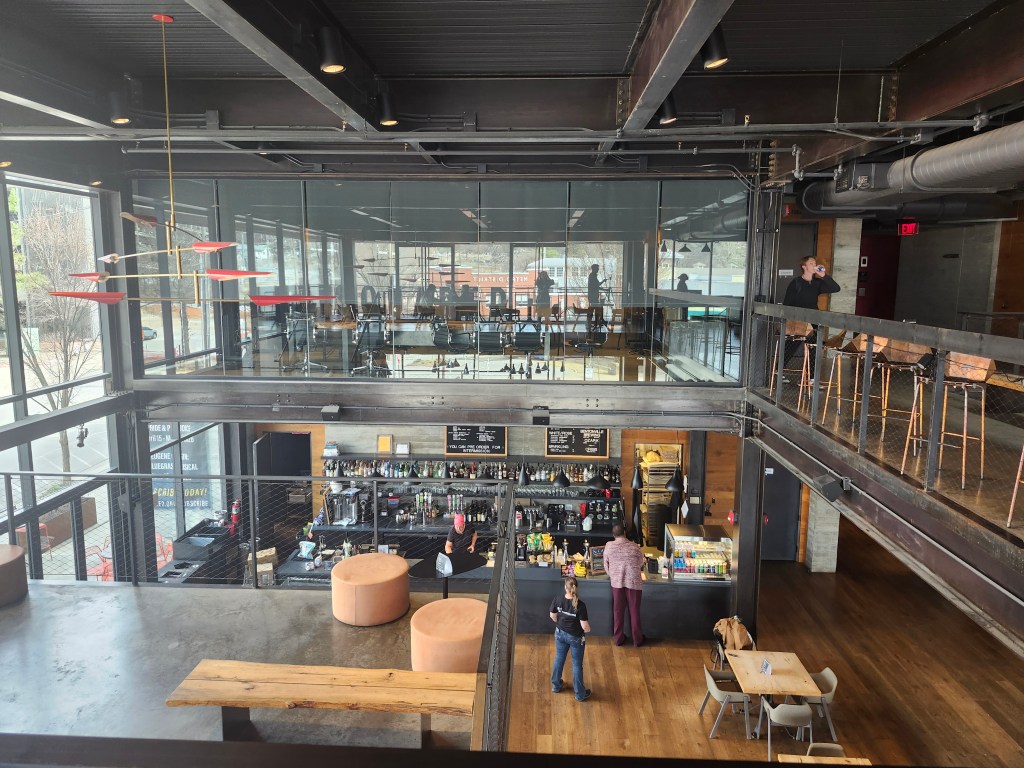
Coffee cups sit beside open laptops as people take advantage of the free Wi-Fi. Conversations overlap under ceiling speakers built for full audio support. Others move between the café, patio, and terrace, treating the space like a daily gathering place rather than a performance venue.
“This is our full-day bar and café,” Jones said. “We operate outside of show hours, but we also operate during show hours. The entire space is meant to be a venue where the community can gather… a ‘third space’ where people can hang out, relax, and do whatever their vibe is that day.”
That day-to-day transformation is managed in large part by Tara Carr Versey, who oversees the Commons, events, and audience services, shaping how the public interacts with the building beyond the stage.
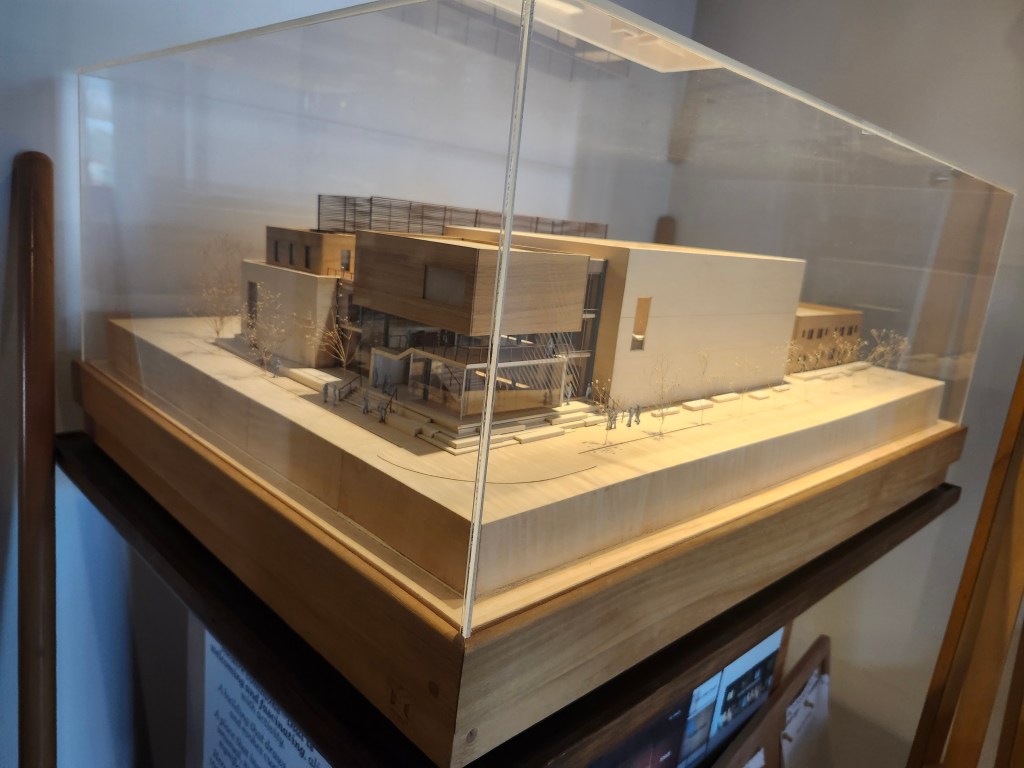
In 2019, that vision became reality through a project supported by the Walton Family Foundation’s Design Excellence program. The new building has since received multiple architectural awards, but for TheatreSquared, the real impact is in how the space functions day to day.
“Since then, our building has won a lot of different architecture awards,” Jones said. “But the biggest thing is how functional it is for us.”
That idea, of a space that can constantly evolve, traces directly back to TheatreSquared’s beginnings in a converted space, where adaptability was not just a feature, it was a necessity.
For Versey, that adaptability plays out behind the scenes in the constant balancing act of programming and logistics.
As an Equity theatre, TheatreSquared operates under the standards set by Actors’ Equity Association, the national union representing professional actors and stage managers across the country.
Founded in 1913, Actors’ Equity establishes the rules that govern how productions run, from minimum salaries and rehearsal hours to safety requirements and working conditions. It ensures that performers and stage managers are paid fairly, have access to benefits like health insurance and pensions, and work in environments that meet professional standards. For theatres like TheatreSquared, that also means structuring both productions and physical spaces in ways that support those guidelines.
“We are an Equity theatre,” Jones said. “So everything is with specific guidelines, like how much space each individual can have.”
Those requirements influence more than just contracts. They shape how rehearsal rooms are designed, how backstage areas are organized, and how performers move through the building. What started as a need for better conditions in a converted warehouse has evolved into a purpose-built space where every detail, from stage to shop, supports the people creating the work.
Those requirements are reflected in the design of dressing rooms, rehearsal areas, and backstage access. Private restrooms, adequate spacing, and proximity to the stage are not optional features but part of a professional standard.
It is a level of infrastructure that distinguishes Equity theatres from smaller, non-Equity productions and ensures that working conditions are consistent and sustainable for performers.
Every Space Has a Purpose
At TheatreSquared, performance is not limited to a traditional stage.
The Commons regularly hosts staged readings and public events, often free and open to the community. Seating that serves as casual café furniture during the day can quickly become an audience arrangement for a performance.
The design allows each production to shape the room, rather than forcing the production to conform to a fixed layout.
For Versey, that flexibility extends beyond theatre itself and into broader community engagement.
“A lot of times people feel like, ‘I’m not really a theater person,’” she said. “Or they’ll say, ‘I’ll do that when I’m older or when I have more money.’”
To counter that perception, she helps lead accessibility efforts like TheatreSquared’s ticketing initiatives.
Intimacy at Scale
The larger West Theatre was designed with a different challenge in mind, maintaining a sense of closeness in a larger venue.
“One thing our patrons told us was, ‘don’t lose the intimacy,’” Jones said. The result is a 300-seat theater where no audience member is far removed from the performance.
“No seat is more than about 20 feet away from the stage,” she said. “There is not really a bad seat in the house.”
The technical design supports that same level of precision. The scene shop connects directly to the stage, allowing sets to move seamlessly into place. Beneath the stage, space exists for orchestras, lifts, and trap doors that expand what is possible during a performance.
Making the Invisible Visible
TheatreSquared also challenges the traditional boundary between audience and production process.
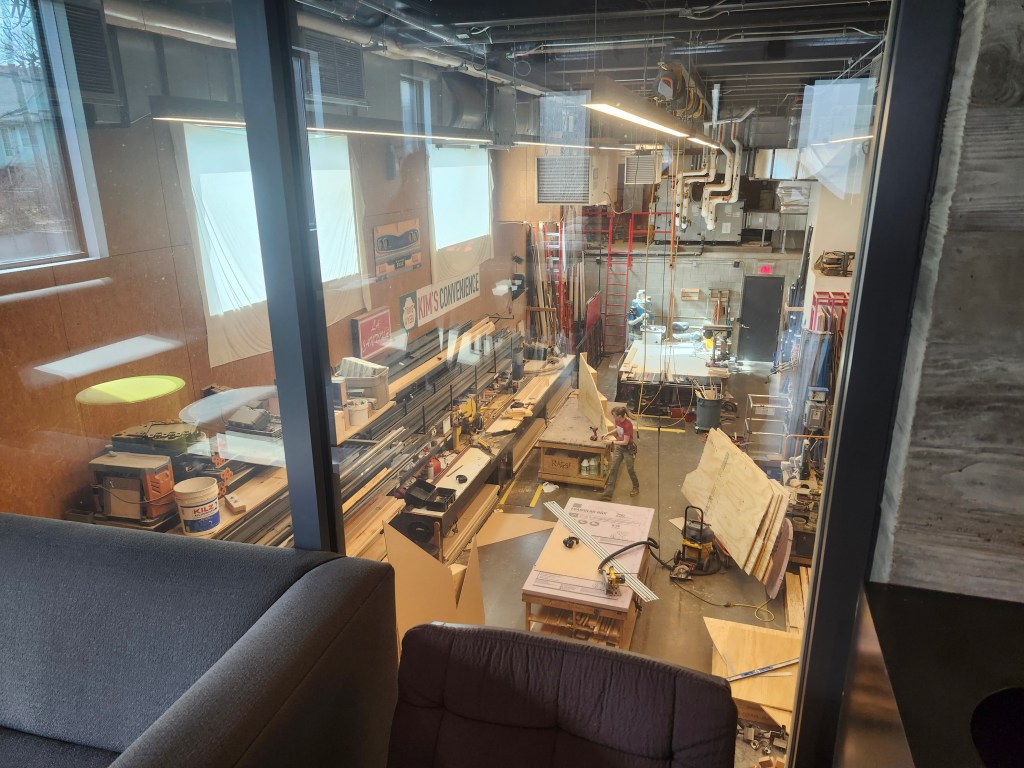
“There is always work happening behind the scenes,” Jones said. “We did not want to relegate our scene shop to a corner where nobody sees it.”
Windows and open sightlines allow visitors to watch sets being built, costumes assembled, and technical elements prepared in real time. That visibility reinforces the collaborative nature of theatre, highlighting the work that often goes unnoticed.
Supporting the Work Behind the Stage
The building’s design also reflects a focus on sustainability for the people involved in each production.
Guest artists are provided with nearby housing, reducing costs and making it easier to bring in talent from outside the region. Additional partnerships help accommodate larger casts during busy seasons.
Even logistical challenges, such as housing availability during University of Arkansas football weekends, become part of the planning process.
Behind those logistics is an equally complex operational structure, especially when it comes to staffing and events.
“It’s a pretty large team,” Versey said, “but for all the things we do, it’s never enough. It is still a pretty lean team.”
Adapting Through Change
During the COVID-19 pandemic, TheatreSquared expanded its approach to performance by investing in streaming technology.
“We invested in cameras so we could stream productions,” Jones said. “It was born out of necessity.”
What began as a temporary solution has remained as a long-term accessibility feature.
“There are patrons who cannot always make it to the theatre,” she said. “So this allows them to experience shows from home.”
A Space That Belongs to the Community
Despite its professional structure, TheatreSquared continues to position itself as more than just a place to see a show. It operates as a working hub for artists, students, and the surrounding community, creating opportunities both onstage and behind the scenes.
“You want the community to support your theater, you have got to support the community,” Jones said.
That philosophy is reflected in how the company operates day to day, not just through performances, but through the experiences built around them.
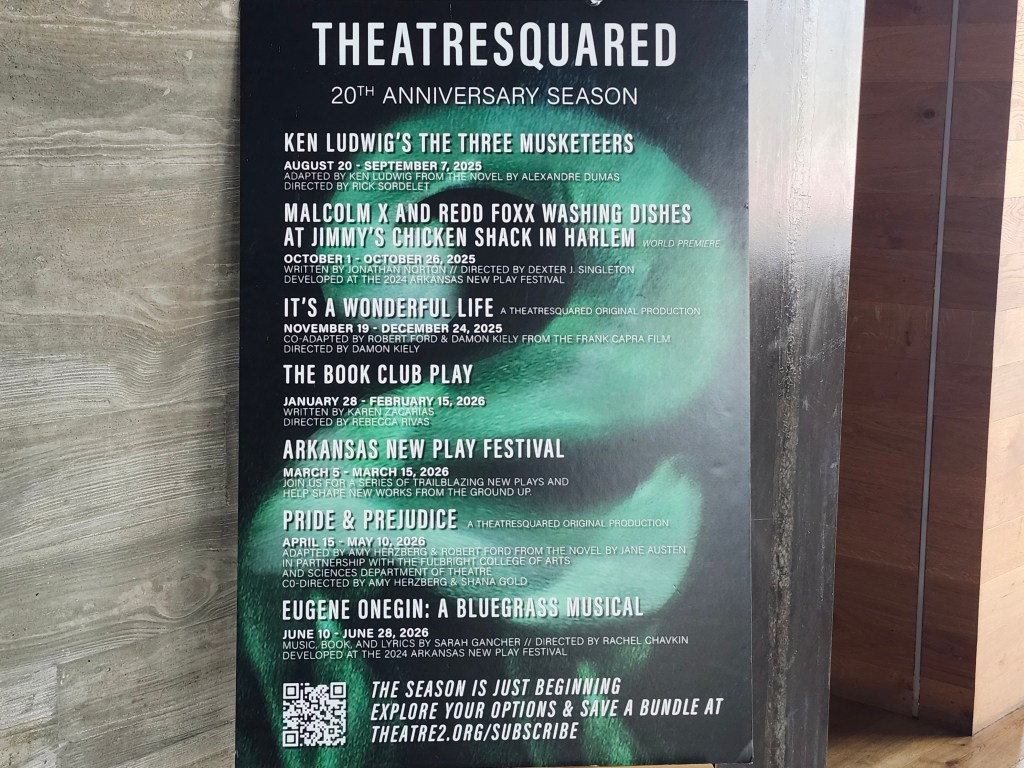
TheatreSquared produces more than 300 performances each year, but it is especially known for developing new work. As a playwright-led company, it has helped launch more than 60 new plays, giving writers the chance to see their work fully realized in a professional setting. That focus on new voices has earned national attention and positioned the theatre as a creative laboratory for original storytelling.
At the same time, the organization invests in people as much as production. Students can get involved through work study programs, often working front of house or alongside production teams. Many part time and seasonal employees eventually move into full time roles, making the theatre not just a workplace, but a pipeline for careers in the arts.
TheatreSquared also places a strong emphasis on inclusion and representation. Through initiatives like its partnership with the LatinX Theatre Project, it creates space for artists from underrepresented communities to develop and share their work. The goal is not just to reflect the community onstage, but to actively build it behind the scenes as well.
What makes the theatre stand out is how all of these pieces connect. It is producing nationally recognized work, training the next generation of artists, and opening its doors to a wide range of voices, all within the same organization.
At TheatreSquared, theatre is not confined to a stage or a scheduled performance. It is built into the design of the building and the rhythm of the people who move through it each day. Whether it is a fully staged Equity production or a quiet afternoon in the Commons, the goal remains consistent: to create a space where stories, and the people behind them, can exist together.
Sources
 Stage AR
Leave a comment